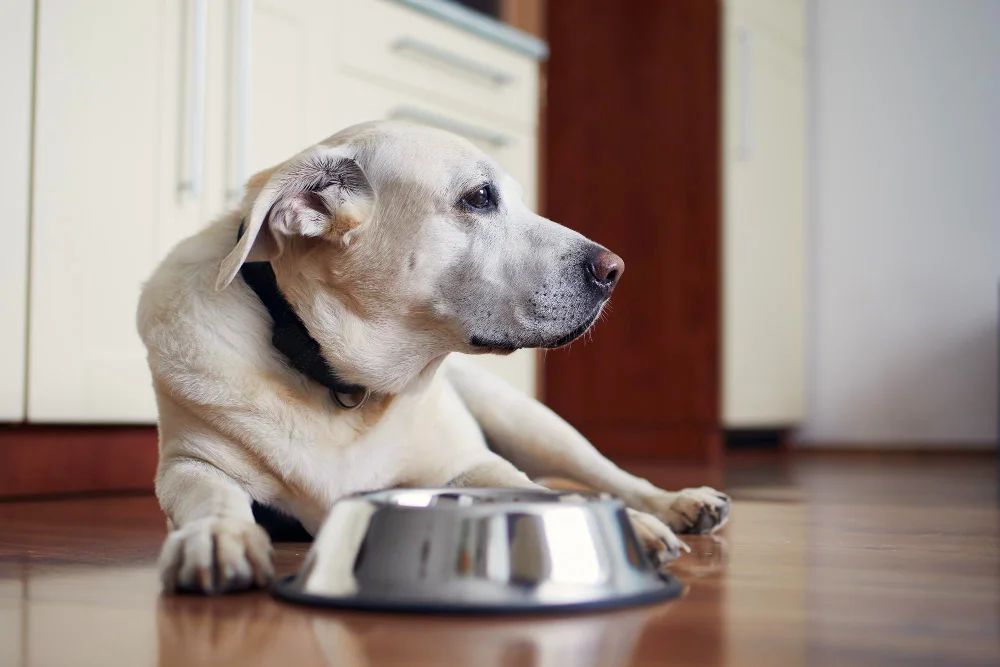
Growling around food or valued objects is a safety issue, not a dominance contest. Management and qualified help matter more than proving you can take things away.
What resource guarding looks like
A dog may freeze, eat faster, hover over an object, move away with it, growl, snap, or bite when someone approaches a valued resource. The resource can be food, a chew, a toy, stolen rubbish, a resting place, or something humans do not consider valuable.
Do not punish the warning
A growl gives information: the dog is uncomfortable with the approach. Punishing that signal may suppress the warning without changing the underlying concern. That can make future interactions harder to read.
Why repeated bowl-taking is a poor test
Some owners repeatedly remove food to prove that they are in charge. From the dog's perspective, a person approaching now reliably predicts loss. That can increase the reason to guard rather than teach safety.
Management comes first
Avoid unnecessary confrontations. Feed in a calm area, keep children away while the dog eats, and prevent access to items the dog is likely to steal and guard. The ASPCA emphasizes that homes with children require particular caution because children may miss warning signals.
Trading is different from grabbing
In lower-risk situations, a structured exchange can teach that giving something up predicts something better. But an internet article cannot safely prescribe a one-size-fits-all protocol for a dog with a bite history or severe aggression.
When to bring in a professional
If guarding involves snapping, biting, children, multiple pets, or escalating intensity, seek individualized help from a qualified behavior professional and discuss medical contributors with a veterinarian. Safety planning is part of treatment, not a sign of failure.
Sources and further reading
ASPCA, “Food Guarding” and “Behavioral Help for Your Pet.”