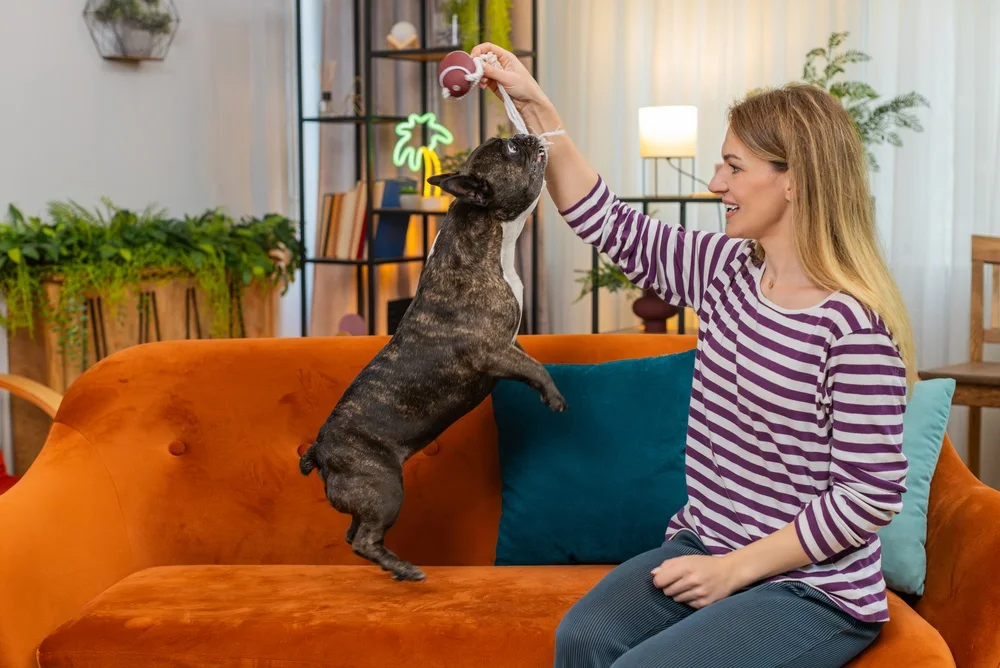
Labels such as natural or green do not automatically tell you whether a cleaner is safe for a dog, cat, bird, or other pet.
Start with the label, not the marketing
A product marketed as plant-based can still irritate tissue or cause problems if swallowed. Follow dilution, ventilation, contact-time, and storage instructions. The ASPCA notes that many household cleaners can be used around dogs and cats when used according to label directions, while specific products and species require extra caution.
Concentrates deserve special respect
Undiluted products can behave very differently from the diluted solution used on a floor. Store concentrates where animals cannot knock them over, chew the bottle, or walk through a spill and later lick their paws.
Dry surfaces matter
If a label tells you to keep animals away until a surface is dry, do that. A pet walking through wet cleaner can create oral exposure later during grooming. Food bowls and toys should not sit in the splash zone while you clean.
Birds are not small dogs
Bird respiratory systems can be especially sensitive to fumes and aerosols. ASPCA specifically advises obtaining veterinary guidance when using cleaning products around birds. Species differences are a good reason to avoid universal 'pet-safe' claims.
Laundry products are easy to overlook
Detergents, fabric softeners, and dryer sheets are ordinary household objects, but some can cause meaningful injury if chewed or swallowed. A recent ASPCA Poison Control article highlighted corrosive risks from certain cationic detergents and related products.
If exposure happens, do not improvise chemistry
Do not induce vomiting or give a home antidote unless a veterinary professional or poison service instructs you to do so. Keep the product package available, note the approximate exposure and time, and contact a veterinarian or animal poison service promptly.
Sources and further reading
ASPCA Poison Control, “Poisonous Household Products” and “What Pet Parents Need To Know About Corrosive Household Products.”