Your cat may have a strong, positive bond with you, but no single gesture proves “love” in the human sense. The clearest evidence is a recurring pattern: your cat voluntarily approaches, remains relaxed, seeks or accepts contact, and feels free to leave. Read those choices alongside the ears, eyes, tail, posture and circumstances rather than treating purring or one slow blink as a verdict.
Choice Is the Most Useful Starting Point
A cat that repeatedly chooses your company when food is not involved is giving you meaningful information. They may settle at the other end of the sofa, follow you into a quiet room, greet you with an upright tail or sleep nearby. Proximity itself can be social; not every cat wants to sit on a lap.
Consider whether the cat has alternatives. Staying beside you means more when another comfortable bed and an open exit are available. A cat that approaches, rubs against your leg and then walks away has not withdrawn affection. They may simply have completed the interaction they wanted.
Temperament, age, health and early experience affect how closeness looks. A reserved cat may show trust by remaining in the room rather than hiding. Compare the cat with their own usual behavior, not with a highly tactile cat online or in another household.
Common Signs of Affection and Trust
Relaxed approaches and greetings
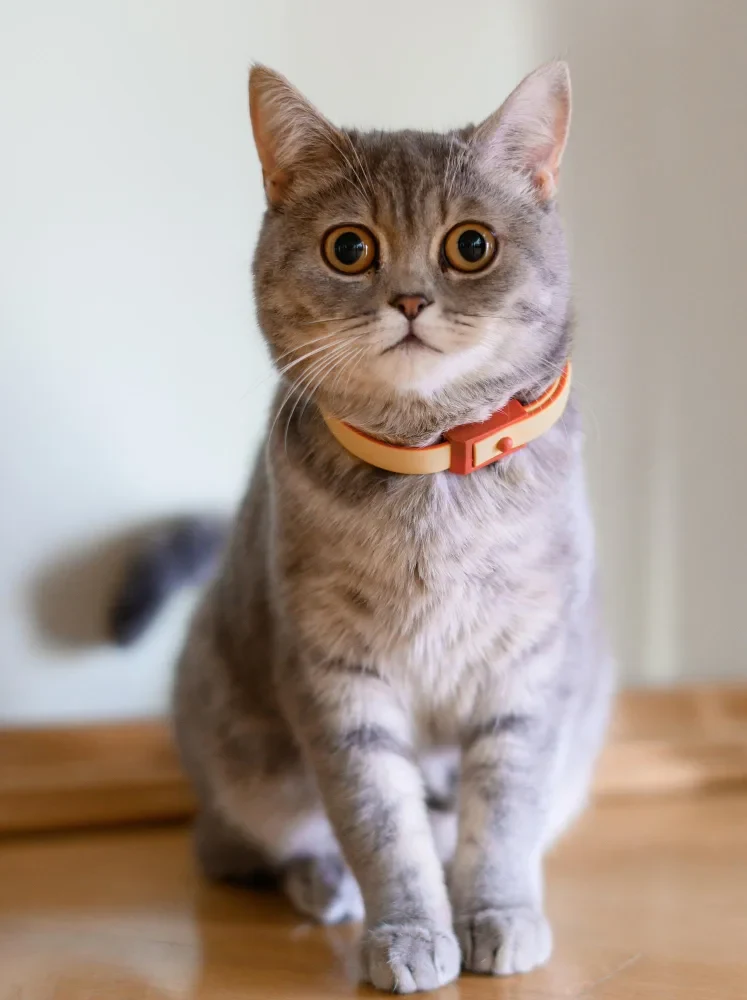
An easy gait, neutral or forward-facing ears, a softly raised tail and a loose body often accompany a friendly approach. A tail held upright can form part of a positive greeting, but a lashing or puffed tail changes the picture. Let the cat close the final distance.
Facial rubbing and head bunting
Cheek rubbing or gently pressing the head against you combines social contact with scent deposition. It is better understood as familiar, affiliative behavior than as a declaration of ownership. Offer a still hand at nose level and allow the cat to decide whether to continue.
Slow blinks and soft eyes
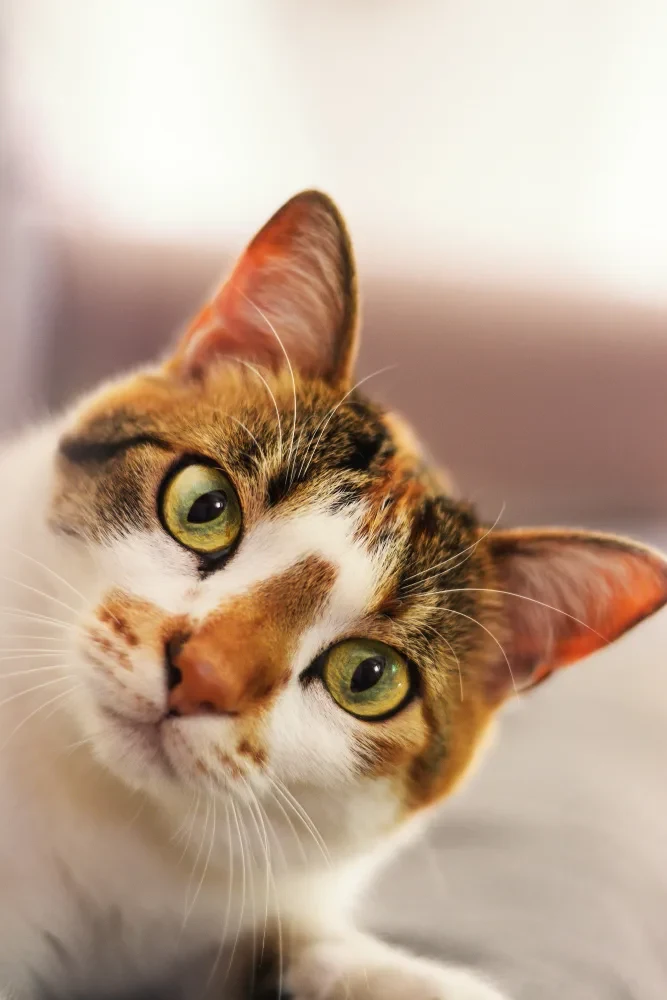
Partly closed eyes and an unhurried blink can occur during a calm exchange. You can blink slowly back without leaning over the cat or staring. Check the rest of the body: soft muscles support a relaxed reading, whereas flattened ears and a tense crouch do not.
Resting near you, following and kneading
Choosing to rest close to you suggests that your presence fits a safe resting context, though it does not establish “complete trust.” Following can reflect sociability, routine, curiosity or an expectation of food. Kneading may accompany comfort or settling down, but its meaning depends on context; protect your lap with a blanket rather than scolding claws.
Why One Signal Is Never Enough
Read the whole cat. Cats Protection advises considering the ears, tail and posture together; it also notes that purring alone does not prove contentment and that an exposed belly is not necessarily an invitation to touch. Its cat body-language overview illustrates why context matters.
| What you notice | More compatible with relaxation | Reason to pause |
|---|---|---|
| Eyes and face | Soft gaze, normal pupils for the light, relaxed whiskers | Fixed stare, very tense face, whiskers pulled tight |
| Ears | Neutral or gently forward | Flattened, sharply turned sideways or repeatedly swiveling |
| Body | Loose posture, normal breathing, leaning into chosen touch | Freezing, crouching, skin twitching or shifting away |
| Tail | Resting loosely or raised during an easy greeting | Rapid lashing, thumping or puffing |
| Interaction | Returns after a pause and solicits more | Turns away, blocks your hand, bites or leaves |
No row should be used alone. Pupils change with light, tails move during play, and ears track sounds. Look for several signals pointing in the same direction and ask what happened immediately beforehand.
Purring, Bellies and Bites Are Easy to Misread
Purring may accompany a pleasant stroke, but cats can also purr in other emotional or physical states. Treat it as one clue. If the cat is loose-bodied, approaching and nudging your hand, the cluster is more consistent with comfort. If they are withdrawn, tense or behaving unusually, purring should not erase those warning signs.
A cat rolling over and exposing the abdomen may be relaxed enough to adopt a vulnerable posture. It does not automatically request a belly rub. Many cats prefer contact around the cheeks, chin or shoulders. Pause and offer your hand away from the abdomen.
A bite during petting is not a mixed-message version of affection. It can follow escalating arousal or overstimulation, and pain is another possibility. Stop, provide space and never punish. Cats Protection’s advice on cat biting also recommends veterinary advice when biting or another behavior changes suddenly.
A Consent-Based Way to Pet Your Cat
- Invite rather than reach. Sit or crouch sideways and offer a relaxed hand without advancing it into the cat’s face.
- Wait for contact. If the cat sniffs, rubs or moves closer, begin with one or two gentle strokes in a usually preferred area.
- Pause early. Remove your hand for a few seconds. A cat that leans in, head-butts or repositions under the hand may be asking for more.
- Respect a neutral answer. Looking away or staying still is not necessarily consent. Do not pursue the interaction.
- Stop at the first change. Tail flicks, skin rippling, ears rotating back, sudden grooming, freezing or a head turn toward your hand can precede swatting or biting.
This rhythm gives the cat control and helps you learn individual preferences. It is especially useful with newly adopted, cautious or easily overstimulated cats. A retreat space also matters; even a simple box can provide choice and cover. See why cats seek these spaces in Why Do Cats Love Boxes So Much?
A Practical Affection Checklist
- Does your cat approach when they could comfortably stay elsewhere?
- Is the body loose rather than frozen or crouched?
- Do the ears, eyes, tail and posture tell a consistent story?
- Does the cat choose the type and duration of contact?
- Do they return after you pause?
- Can they leave without being followed, held or picked up?
- Is this behavior normal for this individual cat?
- Has any sudden reduction in contact, new irritability or hiding prompted a health check?
The most respectful answer to “Does my cat love me?” is found in the relationship, not a trick. Predictable care, gentle invitations, play suited to the cat and reliable respect for “no” create conditions in which trust can grow. Watch what your cat repeatedly chooses; that pattern says far more than any isolated purr.