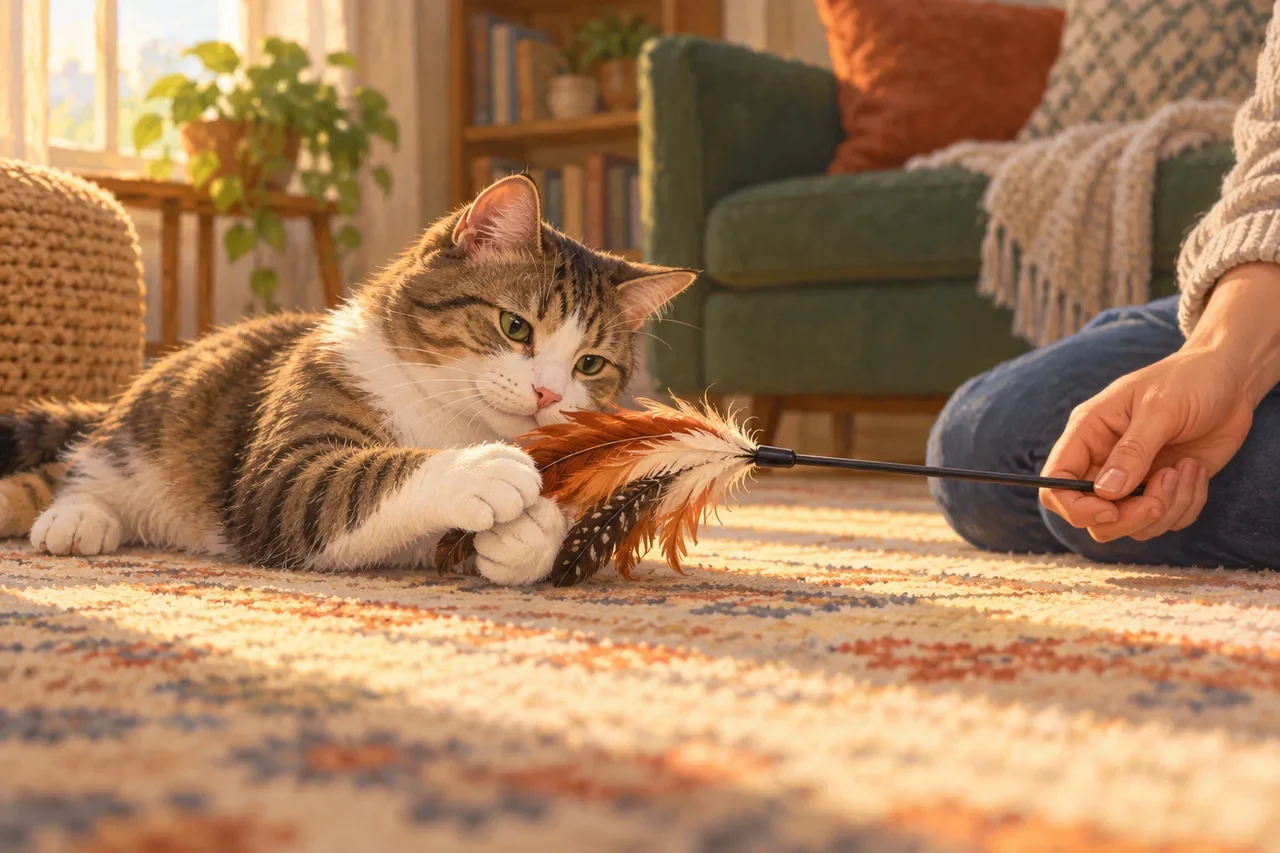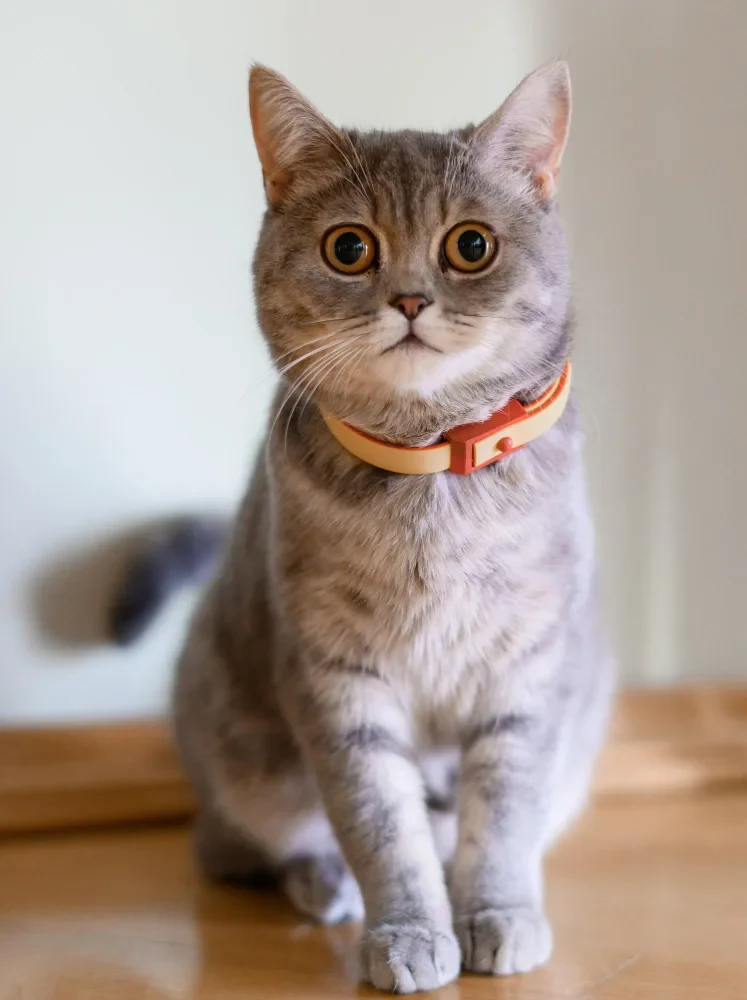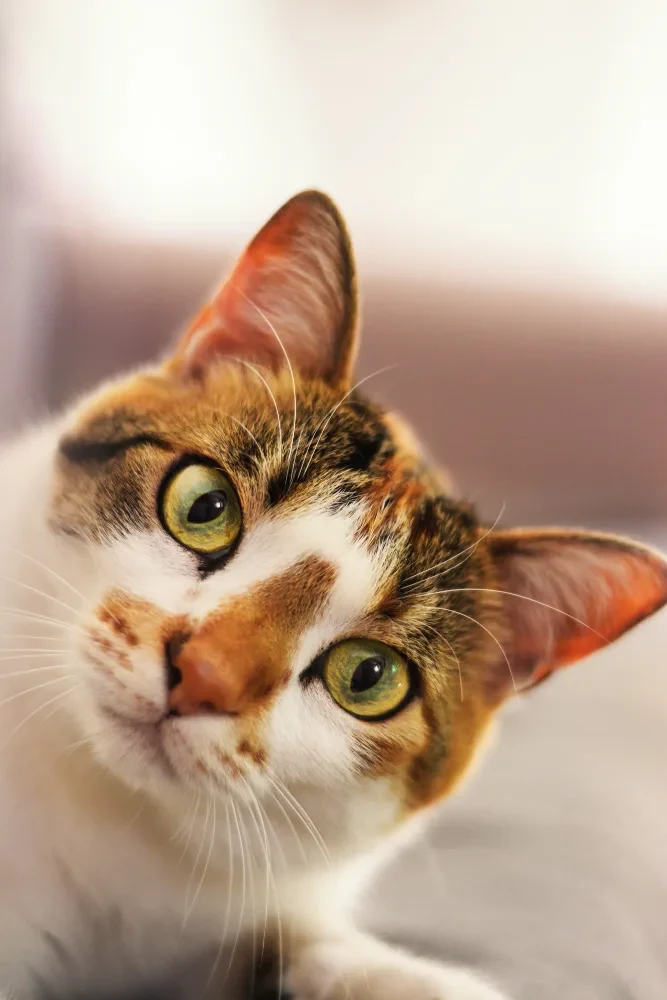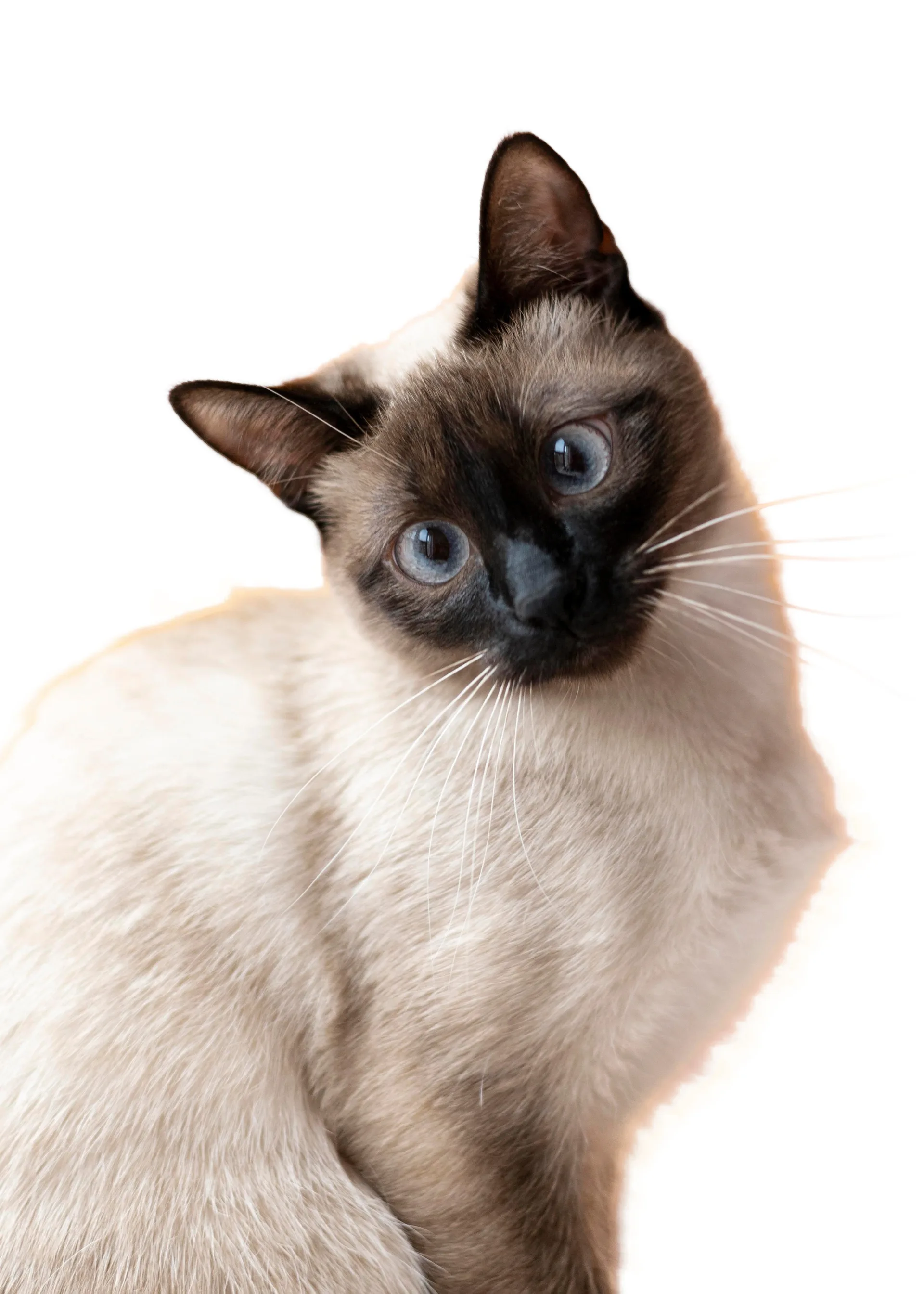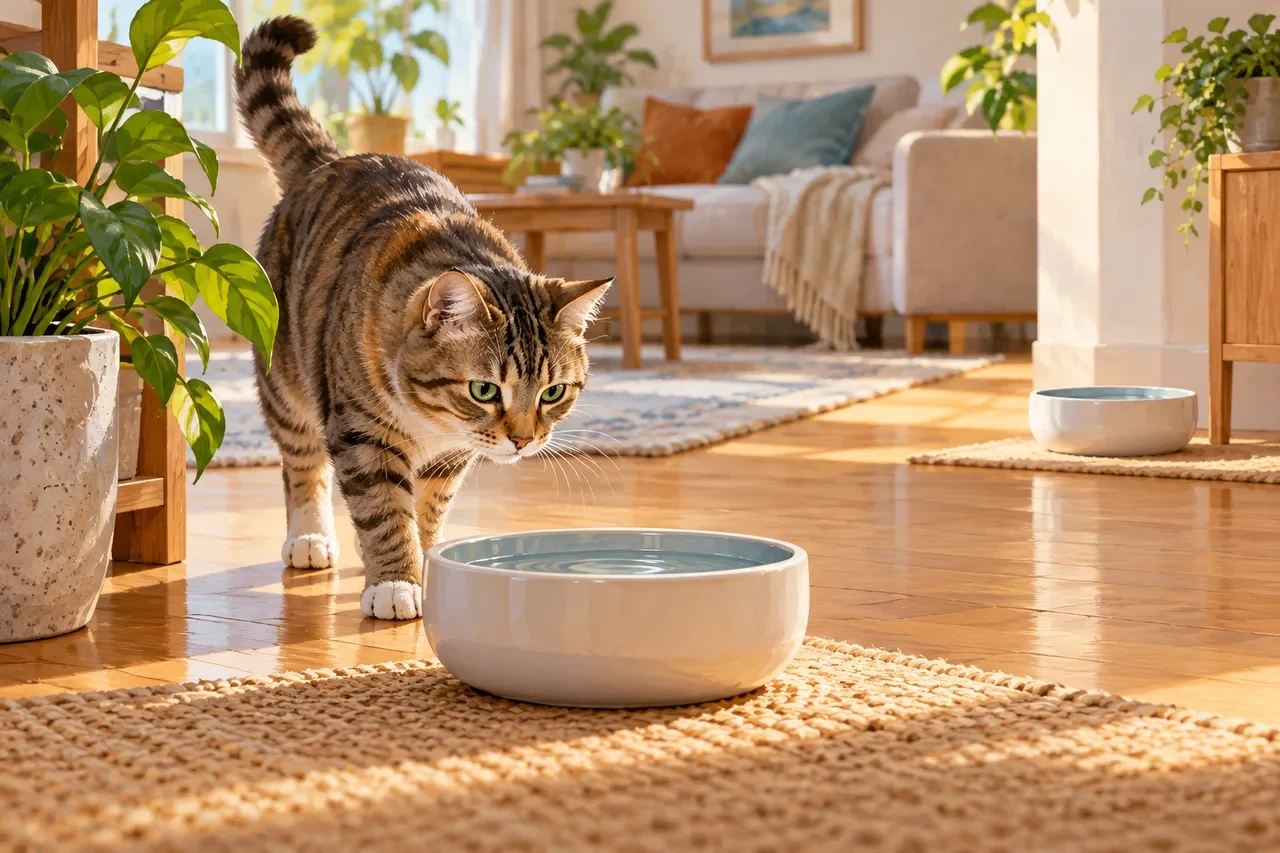
Illustrative editorial image generated with AI.
A cat can have water available and still find the only bowl inconvenient or uncomfortable to use. Location, cleanliness and access matter as much as buying a different container. Start with a few easy-to-reach choices and watch what your cat actually uses.
Spread stations across useful locations
In a home with more than one floor, put water where the cat spends time rather than requiring every drink to involve stairs. Keep bowls away from litter trays and try a location separate from food. Choose a stable surface and a quiet place where the cat can see its surroundings and move away easily.
Cats Protection's drinking guidance recommends more than one bowl in different places. Several bowls touching in one corner do not offer the same practical choice as stations in separate rooms.
Look for competition that is easy to miss
Another cat can control a doorway or stare at a drinking cat without an obvious fight. Watch who visits a station, who waits and who retreats. Adding a bowl elsewhere can remove the need to pass a particular animal. The AAFP and ISFM environmental guidelines explain why separate resources and choice matter in multi-cat homes.
For an older cat, access also includes the route. A station that requires a jump onto a counter is not equivalent to one on an accessible floor. Make changes gradually and keep a familiar option available while testing another.
Choose a bowl you can clean well
A stable, wide ceramic, glass or stainless-steel bowl is a reasonable option to try. Individual preferences vary, and a dislike of one bowl is not enough to diagnose a condition called whisker fatigue. Replace water regularly, wash the container and rinse away cleaning residue.
A fountain may appeal to some cats, but moving water is not automatically clean. Follow the manufacturer's cleaning and filter instructions, including the pump and hidden surfaces. Keep a normal bowl available so a power failure or noisy motor does not remove the cat's only water source.
Interpret drinking alongside food and health
A cat eating wet food may drink less from a bowl because food supplies some water. Cornell's feline hydration guidance explains this distinction and the importance of accessible water. Do not judge hydration from one observed drink or force a target volume based on an online average.
Contact your veterinarian about a sustained change in thirst or urination, especially with weight loss, vomiting, poor appetite or low energy. Record what changed and when; never restrict water to reduce urination. If dehydration is suspected or your cat seems unwell, a new bowl is not a substitute for prompt veterinary assessment.