
Illustrative editorial image generated with AI.
A gathering changes a pet’s home before anyone sits down: the door opens repeatedly, bags appear on the floor and familiar resting places become busy. A useful plan handles those changes in advance. Your pet does not need to greet every visitor for the visit to go well.
Prepare one familiar retreat
Choose a room or separated area your pet already uses comfortably. Set out the usual bed, water and species-appropriate essentials; a cat needs access to a suitable litter arrangement. Check that windows, balcony access and any items left in the room are secure. The room should be a usable resting place, not a sudden punishment after excitement starts.
ASPCA’s holiday-safety guidance recommends a quiet space pets can retreat to when celebrations become noisy. Apply that idea to an ordinary dinner as well. Tell guests that the resting area is off limits and place a simple note on its door.
Give the entrance one job at a time
Before arrivals, decide who opens the front door and who keeps track of the pet. Move the pet away from the entrance before carrying in coats, deliveries or luggage. A door held open for one suitcase can last much longer than a normal greeting.
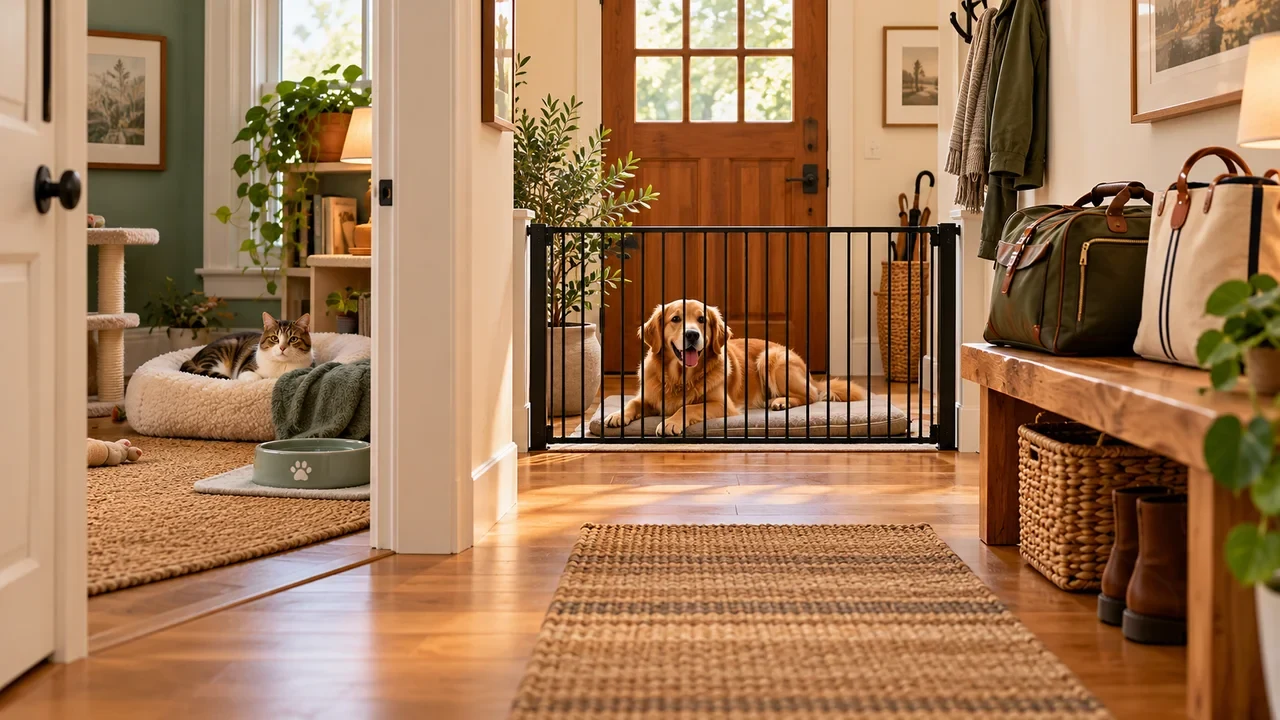
If using a barrier, check it is appropriate for the animal and the space; do not assume every cat or dog will stay behind the same gate. Avoid relying on a guest to remember a rule they have just heard while they are balancing food and talking. Make the room arrangement do as much of the work as possible.
Store bags somewhere pets cannot investigate
Give visitors a closed storage place for handbags, backpacks and medication. A bag placed on a chair is not necessarily inaccessible, and overnight guests may leave pills or other small items beside a bed. ASPCA specifically advises guests to keep medicines in a closed cabinet rather than a bag or suitcase.
Use a short welcoming instruction: “Please put your bags in this cupboard; the dog likes to investigate them.” That is clearer than a long warning list after everyone has spread their belongings through the house. Check the area again when coats and bags come out for departure.
Agree on food before the first plate
Ask guests not to feed the pet from plates. If treats are part of your plan, set aside a suitable portion of the pet’s usual treats and have one person manage it. Several visitors each giving “just one” makes it hard to know what the animal has eaten.
Keep drinks and serving dishes out of reach and secure food waste promptly. The ASPCA guide highlights unattended alcohol, unsuitable foods and accessible rubbish among gathering hazards. If you suspect a pet has swallowed something hazardous, contact a veterinarian or appropriate animal poison service promptly; keep the packaging and do not improvise a home treatment.
Make interaction optional and supervised
Let the pet approach if comfortable, and allow it to leave. Ask visitors to avoid crowding, chasing, picking up or cornering an animal for a photograph. An adult should actively supervise children around pets; if that is not possible, use physical separation.
For a cat, a change in posture or an attempt to move away is reason to stop the interaction rather than ask for one more stroke. Our petting-signal guide helps explain why respecting those early signals matters. If your animal has a history of fear or aggression with visitors, arrange management with a qualified professional before a large gathering.
Use a brief arrival-and-departure check
- Pet located and resting area ready.
- Entrance responsibility assigned.
- Bags, medicines, food and rubbish secured.
- Guests told the feeding and interaction rules.
- Doors checked again while everyone leaves.
Afterward, restore the normal feeding and rest routine and inspect the floor for dropped food or small objects. Note which part of the visit caused difficulty so the next plan can be simpler. The best preparation reduces how often you need to interrupt guests or move a worried animal in the middle of the evening.